News
We’ve made a London Life Sciences Week Guide

Heading to London this November? Explore Onyx’s independent guide to the events and make the most of 15–19 November 2026.
News
Heading to London this November? Explore Onyx’s independent guide to the events and make the most of 15–19 November 2026.
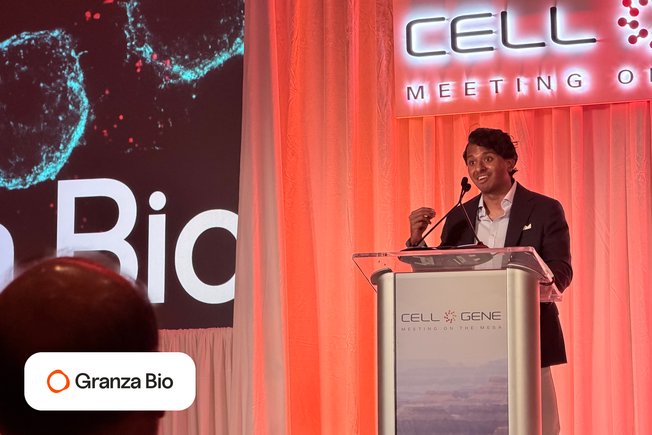 Granza Bio pairs T-cell ‘attack particles’ with CAR-T in a single targeted particle, CEO says at Meeting on the Mesa
 Orca Bio CEO says Tregzi launch hinges on getting manufacturing right every time, at Meeting on the Mesa
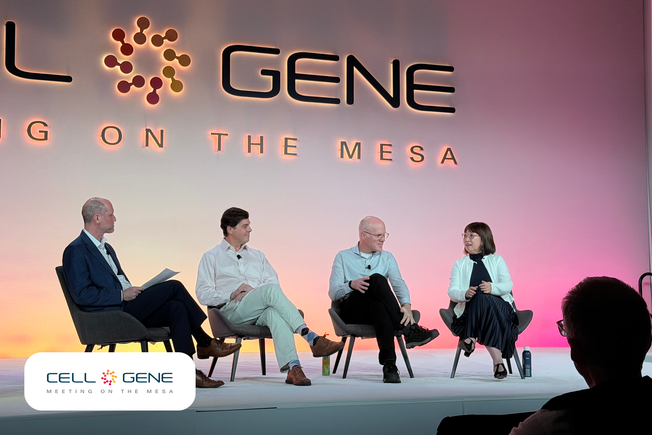 Ori Biotech weighs moving some manufacturing to China, CEO tells Meeting on the Mesa panel
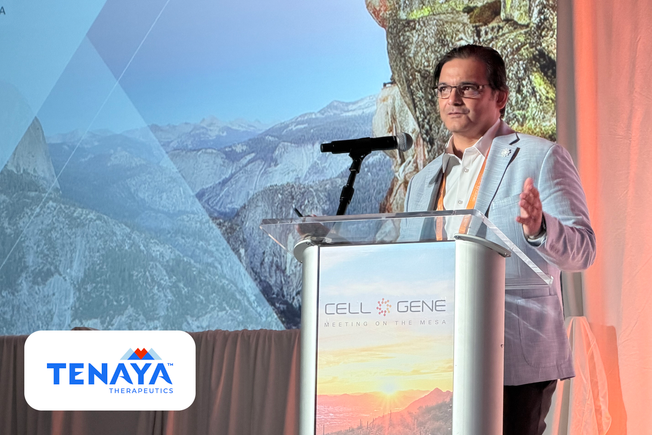 Tenaya Therapeutics to update on pivotal plans for heart gene therapies by year end, CEO says at Meeting on the Mesa
Granza Bio is co-delivering CAR mRNA and mRNA for supramolecular attack particles (SMAPs) to T cells in one targeted particle, CEO Ashwin Nandakumar said, citing preclinical data on improved killing and an apoptotic mode of cell death.
Published 18 Oct 2026
Orca Bio CEO Nate Fernhoff, Pierre Fabre Pharmaceuticals CEO Adriana Herrera and Ocugen CEO Shankar Musunuri discussed launches, resubmissions and reimbursement on a leadership panel at Cell & Gene Meeting on the Mesa.
Published 18 Oct 2026
Ori Biotech CEO Jason Foster said the company is considering moving some manufacturing to China to compete on price there, as a panel with Arbor Biotechnologies and CoJourney debated China's new clinical research rules, speed and costs.
Published 18 Oct 2026
Tenaya CEO Faraz Ali said the company will update on pivotal trial talks for TN-201 in HCM and TN-401 in ARVC by the end of 2026, citing interim data that Ali said showed reduced hypertrophy and arrhythmia burden.
Published 18 Oct 2026
Warner Biddle told Cell & Gene Meeting on the Mesa that Kyverna expects to complete its rolling BLA for miv-cel in stiff person syndrome in Q4 2026, and set out one-year data in SPS and myasthenia gravis and plans in progressive MS.
Published 18 Oct 2026
Rona Therapeutics said Roche took an exclusive worldwide license to its ALK7-targeting RNAi candidate for obesity, with up to $100 million in upfront and near-term payments.
Published 15 Oct 2026
Tamer Mohamed told Cell & Gene Meeting on the Mesa that Aspect Biosystems plans to generate clinical data in 2027, and set out preclinical data for its adrenal insufficiency and type 1 diabetes programs.
Published 7 Oct 2026
Sartorius chief technology officer Oscar-Werner Reif told the Cell & Gene Meeting on the Mesa the company believes its automated Eveo platform can bring cell therapy costs below $40,000 per patient.
Published 7 Oct 2026
Stephen Ward, chief technology officer of the UK’s Cell and Gene Therapy Catapult, told Meeting on the Mesa that developers can share data, testbeds and manufacturing space without losing control.
Published 7 Oct 2026
CEO Hans Schambye told Cell & Gene Meeting on the Mesa that BOOST Pharma expects to be able to start a placebo-controlled trial of BT-101, its investigational stem cell therapy for osteogenesis imperfecta, in the middle of next year.
Published 7 Oct 2026
Tim Hunt told Cell & Gene Meeting on the Mesa that Wall Street data point to seven more cell and gene therapy blockbusters, and said ARM will soon announce changes to its membership dues.
Published 6 Oct 2026
Karim Mikhail told Cell & Gene Meeting on the Mesa the FDA wants eventually to bring its separate rare disease efforts into one package, and set out how the Expedited IND Pilot is meant to speed up first-in-human trials.
Published 6 Oct 2026
CEO Gaurav Shah said a product enriched for full capsids drove the dose cut in the pivotal Danon trial, ahead of an investor webinar on updated Phase 1 data on October 6.
Published 6 Oct 2026
CEO Devyn Smith presented preclinical data from gene editing programs for ALS, with a first CNS IND filing targeted for 2027.
Published 6 Oct 2026
The Vancouver immunologist on myeloid cells as a delivery route, STING for cold tumours, and why in vivo CAR could land near the price of a checkpoint inhibitor.
Published 15 Sep 2026

London · 15–19 November 2026
Explore Onyx’s independent guide to the events and make the most of your week in London.